The Mimic Roblox Monsters List: How to Escape Every Entity
The Mimic is widely considered one of the most terrifying experiences on Roblox. Inspired by Japanese folklore and urban legends, this horror game for..

In the rapidly expanding landscape of online horror gaming, few titles have achieved the atmospheric dread, emotional weight, and sheer narrative complexity of The Mimic. Created by developer MUCDICH and the team at CTStudio, this Roblox experience transcends the traditional adrenaline-fueled jump-scare formula. Instead of cheap fright, it plunges players into a labyrinthine tragedy rooted in original cosmic horror and authentic Japanese mythology. The game is architecturally structured into distinct "Books," each installment exploring a different cardinal emotion — Control, Jealousy, Rage, and Rebirth — manifested as apocalyptic, world-ending beasts.
Beneath the terrifying chase sequences and claustrophobic level designs lies a heartbreaking, multi-generational story of generational curses, abusive family dynamics, and the highly destructive nature of human frailty. The narrative refuses to hand the player easy answers. Instead, it scatters its darkest secrets across hidden dialogue prompts, obscure environmental clues, limited-time Halloween events, and brutal nightmare-mode endings. To fully comprehend this universe, one must step back and stitch together the ancient history of celestial deities, the bloody samurai conflicts of the Edo period, and the modern-day tragedies of the Masashige and Uchiumi bloodlines.
| Game Title: | The Mimic |
|---|---|
| Game Genre: | Horror |
| Difficulty | High |
| Game Mode | PvE |
| Platform | PC, Mobile, Console |
| Age Rating | 13+ |
| Multiplayer | Yes |
| Donate (Robux): | Optional |
Before the narrative itself begins, it is worth understanding what the community is actually searching for. The most frequent and pressing search intents among the player base can be mapped as follows:

To truly understand the horrors that unfold on Earth, the timeline must begin not in feudal Japan or a modern-day high school, but in the spiritual realm that governs all of existence. The universe of The Mimic is not presided over by a benevolent creator. It is ruled by ancient, often malevolent deities whose profound boredom and capacity for cruelty shape the entirety of human history from its very first breath.
The realm of the dead, known as Jigoku — Japanese Hell — is a kingdom of eternal punishment characterized by heavy blood-red skies and ruined, decaying architecture. It serves as the final destination for souls deemed unworthy of rebirth. For countless millennia, this underworld was ruled by an entity known as Shihyosha-no-Reikai, a cold, calculating, and transcendent deity commonly referred to simply as Shinigami, the God of Death. Shinigami was a strict contractualist who viewed the struggles of mortals as divine amusement. He possessed no inherent mercy — ruthlessly claiming the souls of those who broke their pacts or failed his trials — yet he maintained a delicate cosmic balance to ensure the mortal world did not end prematurely, if only so the gods could continue to be entertained by the theatre of human suffering.
However, this cosmic hierarchy was violently and permanently disrupted by the arrival of Hakaisha, the Eldritch Evil God. Described as a primordial force of absolute malevolence, sadism, and near-omnipotence, Hakaisha initiated a cataclysmic, world-shaking battle against Shinigami for control of the underworld. The conflict resulted in Shinigami's crushing defeat. Hakaisha successfully usurped the throne, becoming the new absolute ruler of Jigoku and leaving Shinigami to wander his own ruined stone palace as a fallen king.

Though stripped of his supreme dominion, Shinigami retained immense power, continuing to act as the primary arbiter of death and striking high-stakes contracts with desperate mortals — a role that becomes absolutely pivotal to the events of Book II. The resentment of a dethroned god does not diminish quietly.
Driven by sheer, unadulterated boredom and a sadistic desire to witness human suffering on an unprecedented scale, Hakaisha committed a grotesque act of cosmic self-mutilation. The Evil God tore massive chunks of flesh from his own body — specifically utilizing his eyes and limbs — to birth four catastrophic entities known collectively as "The Mimics" or the Four Beasts. These monstrous entities were meticulously designed by Hakaisha to embody the darkest, most destructive aspects of the human psyche. Each beast is an emotion weaponized to apocalyptic scale.
With his dark creations finally complete, Hakaisha unleashed the Four Beasts upon the mortal realm, initiating an apocalyptic event that would forever scar the history of Japan and set in motion a chain of generational tragedy spanning more than four hundred years.
The descent of the Four Beasts in January of the year 1621 plunged Japan into an absolute nightmare. For ten terrifying days, the beasts rampaged unchecked across the earth. The oceans burned, the earth violently shook, and thousands of innocent lives were extinguished. The monumental task of ensuring the survival of humanity fell squarely upon the shoulders of a legendary samurai named Kusunoki Masashige. But to understand Kusunoki's actions during the Calamity, one must look back fourteen years earlier to a more intimate, personal tragedy.
In the year 1607, Kusunoki faced the imminent death of his unborn daughter, Hirosa, due to severe complications. Blinded by desperation and an overwhelming desire to save his bloodline, Kusunoki traveled into the spiritual depths of Yomi to seek an audience with the fallen death god, Shihyosha. Shinigami, holding true to his desire to keep humanity alive purely for the continued entertainment of the gods, offered Kusunoki a powerful artifact: a blessed spirit orb infused with the power of the "white flame." Shinigami prophesied that a great darkness would soon swallow the land of the rising sun, and he explicitly intended for the unborn Hirosa to wield this blessed flame as an Onna-musha — a legendary female warrior destined to fight the coming beasts.
Tragically, Kusunoki drastically misunderstood the deity's intent. Driven by desperation, cultural misogyny, and a refusal to see his daughter as a warrior, Kusunoki chose not to train Hirosa. Instead, he committed a horrific act of parental abuse, routinely harvesting the sacred, glowing blood directly from his daughter's veins. He utilized this stolen spiritual power to fortify himself and his fellow samurai, completely stunting Hirosa's spiritual growth and leaving the young girl pale, frail, and deeply resentful of her father.
When the Calamity Event finally struck in 1621, Kusunoki utilized the stolen white flame to wage a brutal war against the Four Beasts. For ten exhausting, blood-soaked nights, the samurai fought the entities with unmatched ferocity. Through sheer willpower, he managed to corner and seal three of the apocalyptic beasts across the geography of Japan:
However, when Kusunoki advanced to confront and seal the final, most manipulative entity — Kintoru, the Beast of Control — he discovered a devastating truth. Kintoru had entirely bypassed his physical defenses and infiltrated his home, kidnapping the frail and weakened Hirosa. Exploiting the young girl's deep-seated resentment toward her father for years of blood-harvesting, Kintoru easily corrupted her mind, transforming Hirosa into her very first mindless, obedient puppet.
When the desperate Kusunoki attempted to bargain for his daughter's soul, the puppet-Hirosa deployed Kintoru's deceptive magic, luring her father into a fatal trap. Kusunoki fell for the deception, sacrificing his own life in the process. In his final moments, the legendary samurai summoned the last of his strength to seal Kintoru to a massive Sakura tree in the east. The cost of his victory was absolute and devastating: Kusunoki was transformed into Kintoru's second puppet, and a dark, unbreakable curse was permanently placed upon the entire Masashige bloodline — a generational wound that would bleed for more than four hundred years.

Understanding the true identity and motivations of the entity known as Sama is absolutely critical to unraveling the lore of The Mimic, as she serves as the central, overarching antagonist of the entire first phase of the narrative. Born from the flesh of the Evil God as Kintoru-no-Hakai, the Beast of Control views the concept of free will as a pathetic, chaotic flaw in the universe. She fundamentally believes that humans are mindless fools enslaved by their base instincts, and that true, harmonious perfection can only be achieved when mortals are stripped of their agency and turned into silent dolls under her absolute command.
Though her physical body was sealed tightly to the Sakura tree by Kusunoki, Kintoru's dark influence could not be contained. Her strategy shifted entirely from brute-force planetary destruction to insidious, generational psychological manipulation. Years after the Calamity, the corrupted puppet-form of Hirosa was transfigured into a cursed, physical doll — a seemingly innocent antique eventually discovered by Futaba Masashige, a descendant of the cursed bloodline, who unknowingly gifted the cursed object to her young, isolated daughter, Hiachi Masashige.
Hiachi, suffering from profound loneliness, named the doll "Shaku" and treated the inanimate object as her only true friend. Through the conduit of the Shaku doll, Kintoru slowly and methodically poisoned the young girl's vulnerable mind. Eventually, drawn by an irresistible compulsion, Hiachi wandered deep into the woods to the cursed Sakura tree, meeting the sealed physical form of Kintoru in person. Captivated and deeply manipulated by the ancient entity, the innocent Hiachi gave the beast a new name: "Sama" — a Japanese honorific denoting immense, god-like respect.
"I'm not a bad mother. She did this, she planned it from the start. She kept controlling me... She made me this way." — Futaba Masashige, final confession
Sama manipulated Hiachi completely, framing her horrific demands as simple "favors." These favors resulted in the brutal sacrifice of innocent lives and the slow, insidious corruption of the local village. The beautiful, glowing butterflies that fluttered aimlessly around the village were revealed to be a horrifying illusion — they were, in fact, the trapped, agonizing souls of victims Hiachi had sacrificed to satisfy Sama's selfish, unending hunger for control.
Sama's dominion extended far beyond the mind of a single child. She ruthlessly infiltrated the psyche of Hiachi's mother, Futaba Masashige, through relentless psychological torture. As revealed in the game's tragic lore, Futaba was not inherently evil, nor was she a "bad mother" as labeled by her community — she was systematically broken by Sama's influence. This systemic destruction culminated in Futaba devouring a corrupted butterfly spirit, a horrifying act that physically transformed her into the towering, multi-faced monster known as Futaomote, cementing Sama's status as the most deeply insidious villain in the franchise's universe.
The narrative of The Mimic physically begins for the player with a prequel gamemode known as The Witch Trials, set centuries after the Calamity during the winter of the year 2000. This chapter serves as a vital narrative bridge, vividly illustrating the lingering, devastating effects of the Masashige curse immediately prior to the modern-day events of Book I.
December 2000
The protagonist of this dark era is Keiko Masashige, a direct descendant bearing the crushing weight of her ancestors' sins. Plagued by terrifying hallucinations and visions of the Accursed Witch, Keiko travels to a desolate, abandoned forest village. Utilizing the magic of a glowing butterfly spirit, she unlocks a massive white door, granting her entry into the Chambers of the Lost Souls — a twisted, subterranean labyrinth constructed entirely by Sama's dark magic.
In the center of a sprawling maze, Keiko discovers four ancient podiums bearing the names of the Four Beasts: Control, Jealousy, Rage, and Rebirth. Sama has populated this oppressive maze with "fleshbags" — mindless, roaming abominations crafted directly from her own discarded demonic tissue. To progress, Keiko must carefully evade these hulking, lethal monsters, retrieve ancient, blood-stained scrolls from their gaping mouths, and place them upon the podiums to unlock the dark history of the world.
The climax forces Keiko into a brutal confrontation with the tragic figure of Futaomote in a distorted reflection of a Kyoto-style town. The endings of this prequel are masterclasses in tragic horror storytelling, with each version revealing a different layer of the game's overarching dread.
Modern Era, 2022
Control's Book aggressively shifts the timeline forward into the modern era, following the harrowing journey of Yasu Masashige, a former high school student desperately searching for his missing group of friends. Yasu represents the modern culmination of the Masashige bloodline curse, drawn unwittingly into the center of Sama's grand, terrifying design without any comprehension of the centuries of suffering that preceded his own.
Yasu's investigation begins innocently enough at his old high school, La Quinta Aztecs. However, the mundane, fluorescent-lit setting rapidly deteriorates into a paranormal nightmare. Passing through a seemingly normal elevator, Yasu is violently transported out of reality and into a twisted, subterranean dimension constructed entirely by Sama's will.
As Yasu navigates a dark, oppressive reflection of the ancient Imperial Palace in Chapter II, he encounters the horrific truth of his ancestry. The towering, aggressive monster relentlessly hunting him through the palace corridors is none other than Kusunoki Masashige himself — the legendary samurai who once saved Japan, now completely overtaken by Kintoru's puppetry, forced against his will to brutally hunt down and murder his own descendant across the centuries.
As Yasu progresses deeper into the claustrophobic Ancestors' Hallway, he relies heavily on glowing butterfly spirits to light his path and unlock heavy doors. Then the narrative delivers a gut-wrenching psychological twist. The voice of Sama taunts Yasu from the darkness: "Have you ever wondered what happened to all those butterflies you sacrificed for your selfish needs?" The horrifying truth is revealed — the glowing spirits guiding Yasu are the trapped, agonizing souls of his missing high school friends, whom Sama had slaughtered and transfigured. By using them to survive the maze, Yasu was unwittingly participating in Sama's endless cycle of sacrifice and control.
In the final chapter of Book I, Yasu enters the ominous Cursed Forest. To survive, he must break the ancient hold Sama has over his ancestor. By meticulously locating and burning the scattered, cursed pieces of Kusunoki's armor hidden throughout the woods, Yasu successfully purifies the samurai's tormented soul. Freed from centuries of relentless torment, Kusunoki's spirit bestows his powerful "Blessed Blade" upon Yasu.
Armed with this ancient, ancestral magic, Yasu boldly confronts Sama in her final, terrifying form: Saigomo, a colossal, grotesque spider-like monstrosity. Through a grueling battle of attrition and survival, Yasu utilizes the blessed blade to slash Saigomo, violently stripping away her power and forcing the Beast of Control into a deep state of dormancy. While the Masashige bloodline is finally freed from the curse, the victory is profoundly pyrrhic. Yasu's friends remain dead, the trauma is permanent, and the other three apocalyptic beasts remain a severe threat to the world.
Before delving into the devastating events of Book II, it is imperative to understand the mechanics of Jigoku, the underworld, which plays a central, active role in the ensuing narrative. Jigoku is not merely a static backdrop but a living, breathing realm governed by strict, unforgiving rules — a cosmic economy where human souls are its primary currency.

The sheer horror of Hell is meticulously detailed in the highly informative Death's Challenge event. Players are violently transported to Shinigami's majestic but crumbling stone palace. The Fallen King hunts the living with terrifying, supernatural speed, wielding an ornately decorated massive scythe and possessing a translucent, quasi-invisibility mechanic that makes him a nearly unavoidable predator.
To survive the trial, players must meticulously search the palace to collect exactly 35 crimson-red Seishin orbs — which are, in fact, the trapped souls of the damned — while utilizing flickering "White Flames" as the only viable safe zones where Shinigami's power cannot reach. Shinigami's dialogue reveals his lingering, dangerous arrogance as the fallen king of an underworld throne he still considers rightfully his.
Furthermore, the depths of Jigoku are haunted by surface-world tragedies. In the limited-time Hiachi's Request event, players encounter Shiniachi — the corrupted, weeping soul of the young Hiachi Masashige. Shinigami captured and attempted to corrupt her soul entirely. To grant her peace, players must collect an additional 13 crimson souls and retrieve her lost necklace while evading both Shinigami and the hyper-fast, corrupted Shiniachi herself. This mechanical demonstration of Jigoku proves definitively that human souls are treated as mere currency, and survival in the afterlife depends entirely on adhering to the strict, lethal contracts laid out by the deities.
March–April 2022
Jealousy's Book brilliantly transitions the narrative focus from the theme of systemic, witch-driven control to the corrosive, self-destructive, and ultimately fatal nature of human envy. The protagonist of this harrowing journey is Isamu Uchiumi, a medical pathologist drawn into a massive, deadly conspiracy surrounding the mysterious death of his older brother, Senzai.
Unlike Sama, who operated through isolation and singular, focused puppetry, Enzukai (The Beast of Jealousy) operates through a vast, highly organized pseudo-religion known as the Kiiroibara Cult — the Yellow-Rose Cult. Founded in the blood-soaked year of 1621 by a fanatic named Kyogi during the Calamity Event, the cult fought fiercely alongside Enzukai before being utterly defeated by Kusunoki's forces. When Kusunoki sealed Enzukai deep at the bottom of the ocean near Aogashima Island, the surviving cult members were sealed alongside him. However, Enzukai utilized his immense mimicry power to generate a massive pocket dimension beneath the crushing waves, keeping his devoted followers alive and protected for over four centuries.
The Kiiroibara Cult operates on a terrifying philosophy of absolute surveillance and weaponized envy. Because Enzukai was born directly from the Evil God's eye, eye symbolism is rampant throughout their architecture and rituals. The cult preys exclusively on the insecure, the passed-over, and the deeply jealous, enticing vulnerable humans with dark promises of power and a "black substance" that grants them eternal, monstrous life.
The primary members of the cult are as follows:
The tragic plot commences on March 27, 2022. Isamu, determined to investigate the suspicious fabricated corpse of his brother, travels to the remote Aogashima Island and almost immediately finds himself trapped in Yoki Town. He survives by hiding under the wooden floorboards of the town's buildings, solving Tsukiya's painting puzzle, and delivering a required Seishin Orb to an elder named Keneo — only to fall deeper into the cult's true sanctuary in Chapter II.
Here, the ultimate, heartbreaking betrayal is revealed. Senzai introduces Isamu to his new god, Enzukai — in his first physical form, a massive crimson-skinned humanoid with long chartreuse horns and a glowing third eye on his forehead. Enzukai demonstrates his absolute, unchecked malice by lunging forward and brutally ripping Isamu's beating heart straight from his chest, killing the protagonist instantly.
Isamu's physical death sends his soul plummeting directly into the deepest layers of Jigoku. To return to the world of the living and stop his brother, Isamu must navigate the treacherous, red-lit layers of hell and secure a miraculous contract with Shinigami. This journey introduces entirely new mechanics and psychological terrors, most notably Yurei's Mori (Ghost's Forest) — a dense, grassy woodland governed entirely by Yurei, a former human woman named Kiku who died violently and became a misanthropic demon who views all humans as pathetic parasites.
The gameplay in Yurei's Mori is intensely psychological and deeply unforgiving. The environment features terrifying statues that operate on a weeping-angel mechanic, only moving to attack when the player looks away. Furthermore, if the player fails to look directly at Yurei when she manifests in the environment, she will execute an instant, unavoidable kill. Defeating her transforms her body into a bare, lifeless tree, allowing passage to the final, deepest layer of Jigoku.
Arriving at Shinigami's majestic throne, Isamu desperately begs the Fallen King for resurrection. Shihyosha agrees to a temporary revival, but only if Isamu survives a high-speed, lethal chase through the palace corridors. Isamu barely succeeds, leaping through a glowing white portal back to Earth as the death god ominously mutters: "A tragic fate lies ahead."
April 15, 2022
Isamu violently awakens in the mortal realm only to make a horrifying discovery. While he was fighting for his soul in Hell, Enzukai utilized the immense power of Isamu's stolen heart to finally shatter the ancient samurai seal holding him beneath the ocean. The Kiiroibara Cult has ascended fully to the surface, and Kawasaki Ward in Tokyo has been transformed into a burning, apocalyptic wasteland.
Isamu navigates the flaming, destroyed ruins of the city, evading terrifying ambushes from a returning, vengeful Shosai in a heavily destroyed mall, and utilizing careful stealth to bypass his corrupted brother Senzai in a desecrated temple. Guided by the ancient spirit of Ashikaga Takauji, Isamu meticulously collects fragments of the Shiroi Hono Lantern — the only artifact in existence capable of countering the Beast of Jealousy's immense power.
The climax forces Isamu into a massive, arena-style battle against Enzukai-Ryu, the beast's third, most powerful, and final form. Drawing heavy inspiration from massive Kaiju designs, Enzukai transforms into an enormous, pale-blue, serpent-like dragon covered in grotesque, blinking eyes, with a humanoid upper body hanging horrifically from the dragon's mouth. Despite Isamu successfully utilizing the lantern to neutralize the beast and save the city, the cruel contract with Shinigami expires. Isamu's soul is violently pulled from his body by The Dealer (Shihyosha), and his physical form collapses dead in front of Senzai.
The narrative branching occurs precisely here, leading to two profound, emotionally devastating endings:
A major factor in The Mimic's massive success and critical acclaim is its meticulous, respectful integration of authentic Japanese mythology and urban legends. The developers did not merely invent generic monsters — they adapted ancient Yokai and terrifying modern urban legends, weaving them seamlessly into the Masashige and Uchiumi bloodlines to ground the cosmic horror in genuine cultural reality.
This deep alignment with authentic mythology elevates the game from a simple survival horror experience into an educational, terrifying deep-dive into Japanese cultural fears. The brilliant integration of these diverse entities into a unified cult dynamic justifies their presence in the modern world, making the threat feel both ancient and immediately dangerous.
The sprawling lore of The Mimic is far from complete. The overarching narrative structure promises four distinct books, perfectly mirroring the Four Beasts unleashed by the Evil God Hakaisha. With Control forced into dormancy by the blessed blade of Yasu Masashige, and Jealousy defeated by Isamu Uchiumi at the devastating cost of his own life, the ancient samurai seals on the remaining two beasts are inevitably weakening. The stability of the world is crumbling.
The Bad Ending of Jealousy's Book confirms beyond a shadow of a doubt that Netamo is actively observing the surface destruction from within the magically reinforced cage Kusunoki placed him in centuries ago. Rage's Book will focus on the catastrophic, violent release of this entity. Netamo is characterized purely by unadulterated wrath. Unlike Sama's quiet, insidious psychological manipulation or Enzukai's systemic, organized cult conditioning, Netamo represents raw, explosive, unpredictable violence. The protagonist of this upcoming book will face a deeply physical — rather than purely psychological — threat. If the pattern holds, the protagonist will be a direct descendant of a previously established bloodline, drawn into the destruction through a personal tragedy mirroring the sins of their ancestors.
Following the devastation of Rage, the final, climactic installment will be Yuma's book — focusing entirely on the most enigmatic and deeply mysterious of the four beasts. Sealed deep beneath the earth, Yuma is described as "watching the world in reverse." As the absolute embodiment of rebirth, Yuma's narrative will likely deal with the cyclical nature of the curse itself, forcing the final surviving descendants of the Masashige and Uchiumi bloodlines to confront the Evil God, Hakaisha, directly — and potentially break the horrific cycle of Jigoku once and for all. The very concept of the beast suggests that the narrative may loop, invert, or shatter the linear structure established by the previous three books.
The narrative brilliance of The Mimic lies in its unwavering commitment to its overarching themes. Sama's pursuit of absolute control strips away human agency, resulting in the heartbreaking, slow corruption of innocent families. Enzukai's weaponization of jealousy highlights the tragic fragility of brotherhood, exploiting Senzai's childhood trauma to orchestrate a catastrophic cult uprising. Above it all sits the indifferent, terrifying cruelty of cosmic deities like Hakaisha and Shihyosha, treating human desperation and sorrow as nothing more than theatrical performance staged for their entertainment.
From the historic 1607 deal of a desperate samurai who misunderstood a prophecy to a burning Tokyo in 2022 where a pathologist paid with his life to save a city he loved, the timeline of The Mimic is a continuous, beautiful, and terrifying ripple effect of trauma. Parental failure becomes generational curse. Generational curse becomes cosmic catastrophe. Every monster the player runs from was once a person someone loved. That is what makes The Mimic far more terrifying than its jump scares — and far more worth understanding.
As the community eagerly awaits the unleashing of Rage and Rebirth, the established lore ensures that the foundation of this universe is as terrifyingly deep as the endless abyss of Jigoku itself.
Tired of the terrors of Jigoku? Gain an edge in the game — check out our latest list of The Mimic codes to grab free bonuses and make your survival much easier!
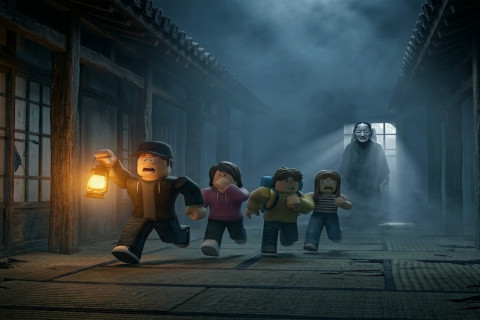
The Mimic is widely considered one of the most terrifying experiences on Roblox. Inspired by Japanese folklore and urban legends, this horror game for..
Beating Nightmare Mode in The Mimic is the ultimate test of your skills, reaction time, and stress resistance in Roblox. Many players give up after do..
The Mimic is one of the most popular and scariest horror games in Roblox. Inspired by Japanese folklore, it delivers intense gameplay, creepy atmosphe..